

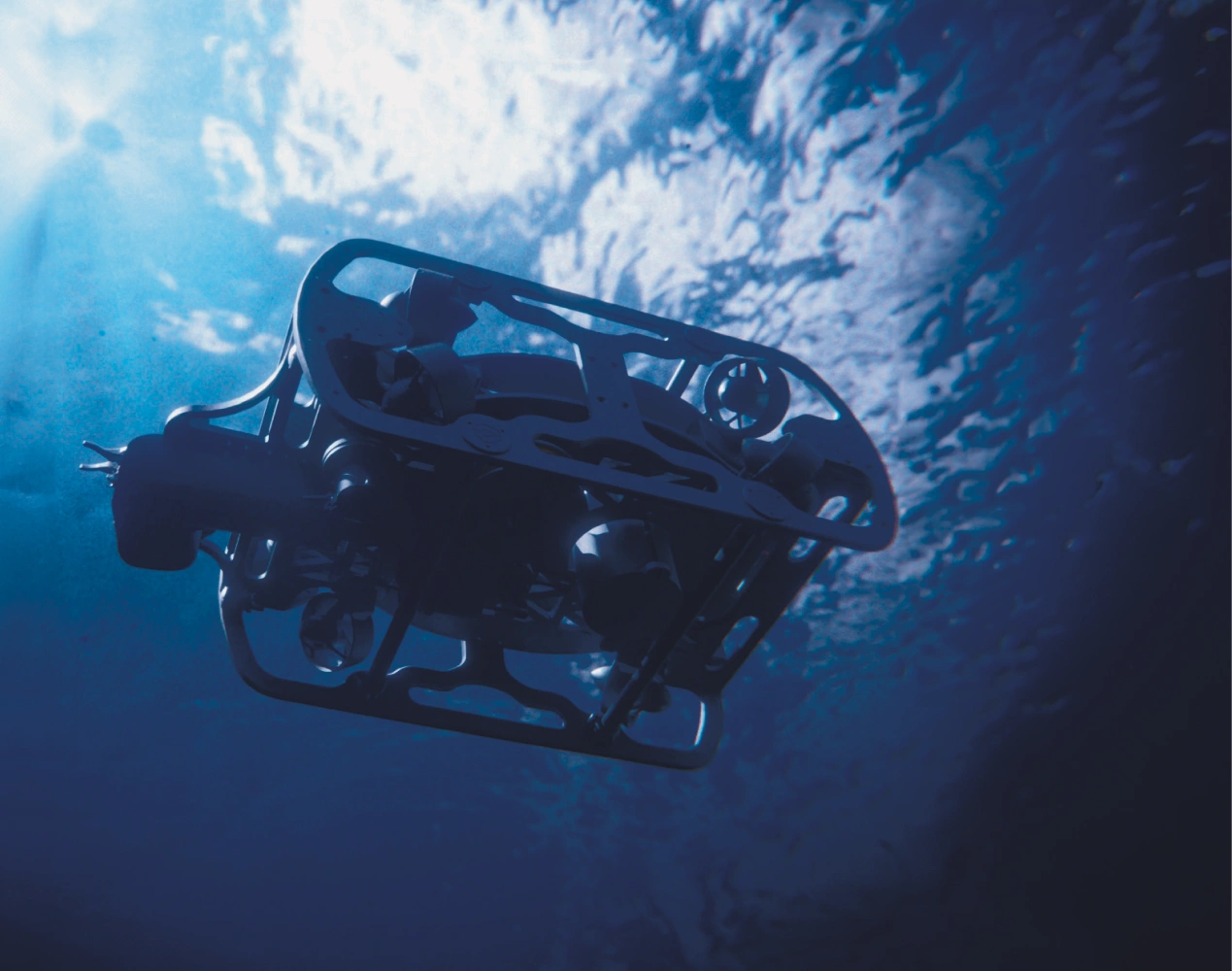
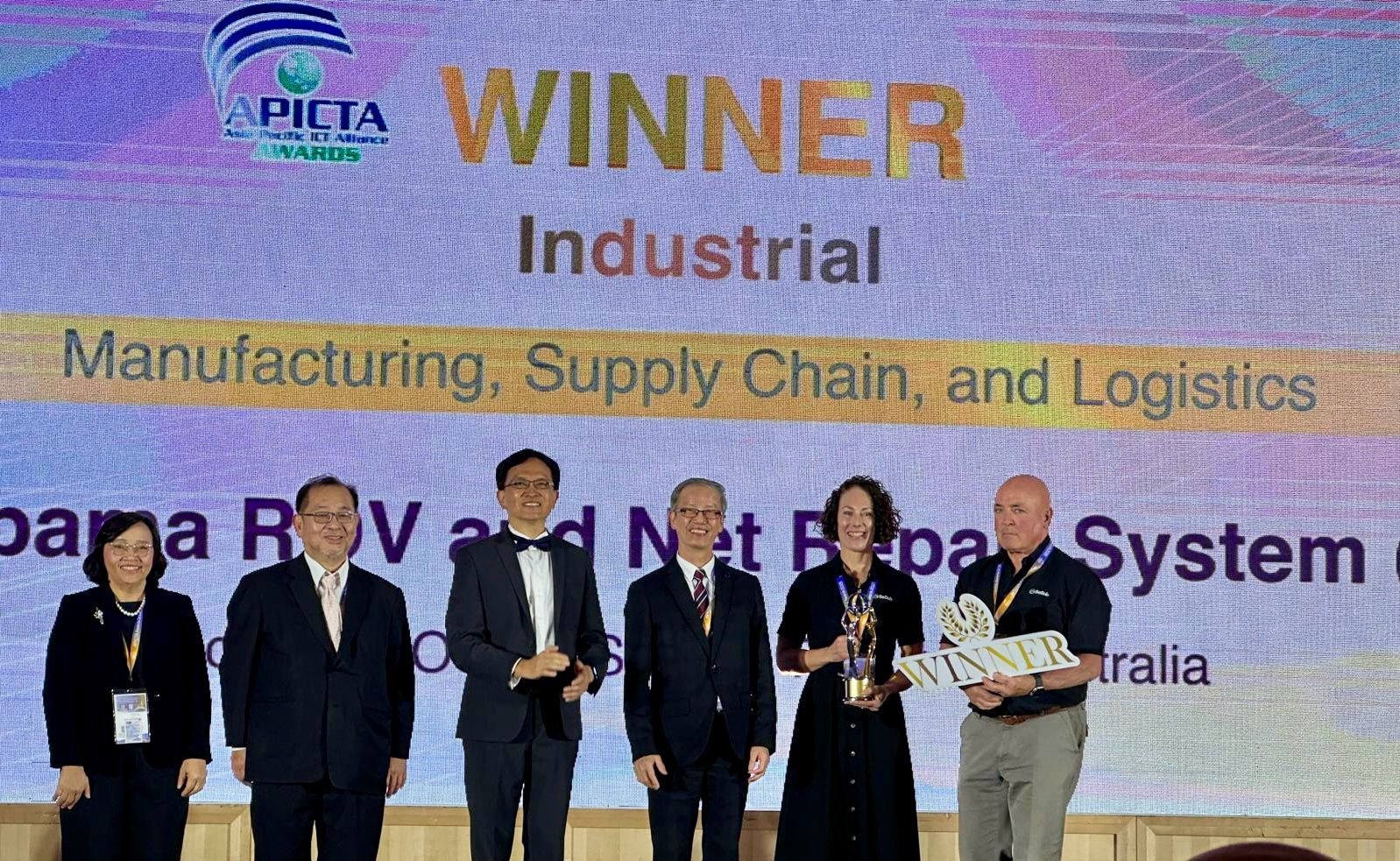
We’re proud to share that Southern Ocean Subsea has been recognised at the 2025 Asia Pacific ICT Alliance (APICTA) Awards in Taiwan, with our Apama ROV Net Repair System (NRS) named Winner in the Industrial Manufacturing, Supply Chain and Logistics category.
Selected from more than 270 entries across 14 economies, this award marks a significant milestone for our team and for subsea robotics innovation developed and built in Tasmania.
Solving a Real Aquaculture Challenge with Subsea ROV Technology
Apama ROV NRS was developed in direct response to a real problem faced by aquaculture operators every day: how to repair underwater nets safely, efficiently, and without exposing divers to unnecessary risk.
Designed specifically for aquaculture subsea operations, Apama enables in-situ net repair at depth using an ROV, reducing downtime, improving safety outcomes, and giving operators greater confidence in challenging sea conditions. It’s a practical tool, built for real farms and real environments-not a concept, but a working system already delivering results.
Seeing this work recognised on an international stage is a proud moment for everyone involved.
Global Recognition from the Heart of the Aquaculture Industry
Following the awards, we received a message from one of the Taiwanese judges, Tim, that truly meant a lot to our team. He shared that the judging panel unanimously agreed Apama NRS deserved the win, describing Southern Ocean Subsea as a unique and highly innovative company.
He also highlighted the strong commercial appeal of Apama for Taiwan and Southeast Asia-regions where marine aquaculture continues to grow rapidly and encouraged us to keep expanding into global markets. Hearing that our ROV-based subsea repair system resonates so strongly in major aquaculture regions reinforces that we’re solving the right problem, in the right way.
Engineered for Real Aquaculture and Real Subsea Conditions
Apama ROV NRS combines:
- a purpose-built underwater repair ROV
- specialised net-repair tooling
- an integrated control and software stack that allows operators to inspect, locate, and repair net damage at depth
The system is the result of extensive R&D, including around eight prototype iterations, shaped by real-world use and operator feedback. It reflects the engineering maturity and defensible innovation pathway we’ve deliberately built, supported by global IP protection.
The award also acknowledges our growing commercial traction. Apama systems are already operating internationally, including in Norway, supported by a scalable business model that spans equipment sales and recurring revenue across maintenance, software, and consulting.
Setting a New Global Standard for ROV Net Repair
As Kelsey Treloar, Our Director of Research and Development, shared:
“We are very happy with the win and would like to thank the team and everyone involved in our journey for their effort and passion to get the product to where it is today. Our goal is to become a global industry standard for ROV net repair and maintenance. When people have a hole in their net, we want them to say: we need an Apama NRS.”
Looking ahead, we’ll continue expanding the Apama ROV product range and pushing the boundaries of what subsea robotics can deliver for sustainable aquaculture. Current work includes new tooling designed to measure the breaking strain of net repairs-providing greater assurance of repair quality, supporting certification requirements, and helping keep nets in the water longer. The result is reduced downtime, lower costs, and less environmental impact.
Backed by Industry, Built with Purpose
We’d like to extend a genuine thank you to the APICTA organisers and hosts, the judging panel, our engineering team, partners, and the aquaculture operators who have backed Apama ROV NRS and helped shape it through real-world use and feedback.
We also acknowledge TasICT for their continued support of Tasmania’s innovation ecosystem and for helping local technology companies compete on the global stage.
We’re proud to represent Tasmania and Australia-and excited about what lies ahead for Southern Ocean Subsea, subsea ROV technology, and the future of aquaculture.

