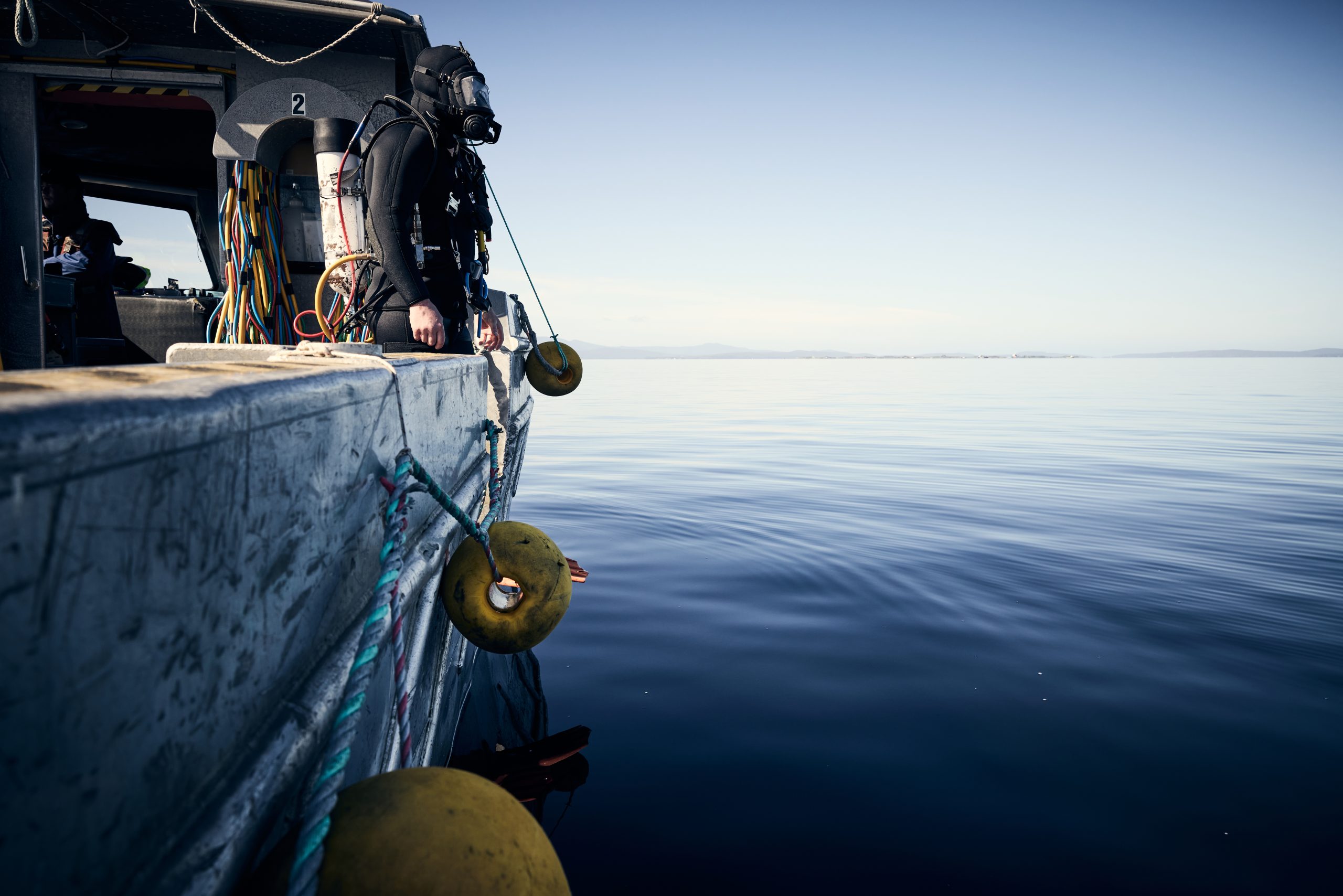
We work alongside professional divers, operators, and aquaculture teams every day. We see firsthand the skill, experience, and commitment it takes to work safely below the surface. Divers have always been -and continue to be -critical to subsea operations.
What we’ve also seen over time is how subsea work is changing.
Sites are becoming more complex. Inspection cycles are more frequent. Safety expectations are higher. And there’s growing pressure to reduce risk wherever possible, without compromising the quality of the work. That’s where ROV technology has started to play a bigger role -not as a replacement for divers, but to support their work more intelligently.
What SoSub Is Seeing in Modern Subsea Operations
From our perspective on the ground, subsea work today looks very different from even a decade ago.
We’re regularly working in environments that involve:
- Stronger and less predictable currents
- Lower visibility and tighter working spaces
- Increased inspection and reporting requirements
- A greater focus on safety, compliance, and repeatability
Divers remain essential for complex, hands-on tasks. But we’ve also seen how often they’re being asked to carry out routine or repetitive work in conditions that add risk without adding value. That’s where ROVs have proven their worth.
Where ROVs Fit -From Our Experience
When we deploy ROVs, the goal isn’t to remove divers from the equation. It’s to use the right tool for the job.
In our day-to-day operations, ROVs are particularly effective for:
- Regular net inspections
- Early identification of damage or wear
- Monitoring areas that need frequent checks
- Working in conditions where sending a diver down isn’t the safest option
Using an ROV for these tasks allows us to keep divers out of the water when it doesn’t make sense for them to be there -and deploy them when their expertise is genuinely required.
Safety Is Always the Starting Point
One thing that’s consistent across every site we work on is the focus on safety.
By using ROVs for inspection-heavy or higher-risk tasks, we’re able to significantly reduce exposure to:
- Strong currents and surge
- Entanglement risks
- Confined or restricted areas
- Long bottom times and decompression considerations
For us, this isn’t about efficiency alone. It’s about protecting people -especially highly skilled divers whose experience is invaluable and shouldn’t be spent on tasks that technology can safely handle.
Operational Benefits We See on Site
Beyond safety, ROVs have changed how we plan and deliver subsea work.
From an operational standpoint, we consistently see:
- Faster mobilisation compared to dive-only operations
- Longer working windows without fatigue limitations
- Fewer delays caused by weather or safety stand-downs
- More consistent inspection data for reporting and follow-up
This makes subsea operations more predictable -which is something operators value just as much as cost savings.
Divers Still Lead -ROVs Support
It’s important to be clear about where ROVs work best, and where they don’t.
From our experience:
- ROVs are ideal for inspections, monitoring, and targeted repairs
- Divers are essential for complex intervention, tactile work, and problem-solving underwater
The most effective operations we’re involved in are hybrid setups, where ROVs handle the routine and higher-risk tasks, and divers focus on work that genuinely requires human judgement and experience.
Why We Developed APAMA the Way We Did
APAMA wasn’t designed in isolation. It was developed in response to the challenges we kept seeing on-site.
We needed an ROV that could do more than just inspect. We needed a system that could:
- Identify issues early
- Carry out targeted repairs at depth
- Reduce the need for follow-up dive operations
- Perform reliably in real-world conditions
APAMA is built to support diver-led operations by taking on the repetitive and risk-heavy work -allowing dive teams to focus where they add the most value.
What We’ve Seen at Huon Aquaculture
At Huon Aquaculture, APAMA has become part of regular subsea inspection and maintenance activities.
From our involvement, this has meant:
- Inspections are happening more frequently and consistently
- Net damage is being identified earlier
- Less disruption from dive mobilisation
- Reduced diver exposure to repetitive tasks
Diving remains an important capability on site, but APAMA has changed when and how often divers need to be deployed.
Learning From Our Partners in Norway
We see the same thinking reflected internationally.
Our partners at ROV Remote in Norway operate ROVs remotely from a control centre, carrying out inspection and repair work without deploying divers for many tasks. Their focus, like ours, is on reducing unnecessary diving while maintaining high operational standards.
It reinforces what we’re seeing across the industry: the move towards safer, smarter subsea operations is happening globally.
How We See the Future of Subsea Work
From where we stand, the future isn’t about choosing between divers and ROVs.
It’s about combining experience and technology.
APAMA allows us to support diver-led operations, reduce risk, and deliver more consistent outcomes. Divers remain at the centre of subsea work -but they’re supported by tools that make the job safer and more sustainable.
That balance is what’s shaping the next phase of subsea operations, and it’s what we’re focused on delivering every day at SoSub.