5 Misconceptions About Using ROVs for Underwater Repair Work
(And What We’ve Learned After Years in the Water)
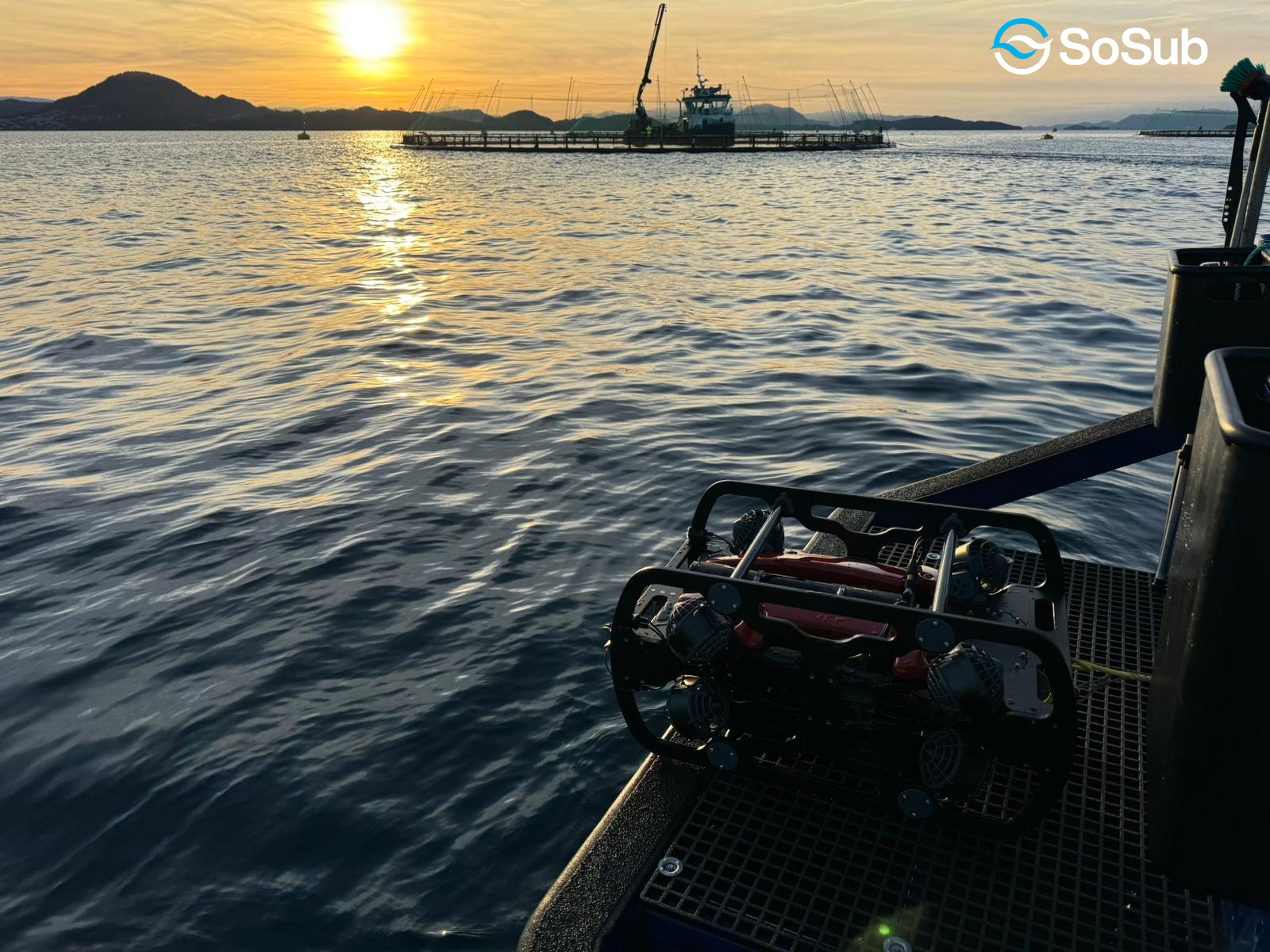
The farm manager had his arms crossed when we put the APAMA in the water. He’d seen inspection ROVs before, little camera sleds that survey damage and then surface so someone else can deal with the problem. “So, when does the diver go in?” He asked.
He didn’t ask that again. Within the hour, he was watching a net repair happen live, no diver, no net removal, no production stoppage. The APAMA had stitched the hole closed, tensioned the repair, and trimmed the finish, all at depth. The expression on his face shifted from sceptical to quiet. The gap between what people assume ROV technology can do and what it actually can do is something our team sees more than we probably should.
These misconceptions aren’t the fault of the people who hold them. They come from a real history where ROVs genuinely were just eyes on a problem. Here’s what we keep having to set straight.
Misconception 1: “ROVs are just for inspection; you still need a diver for the actual repair.”
We hear this constantly, and it’s the one that costs operators the most time and money to hold onto.
The APAMA was built from the ground up as a repair system, not an inspection platform. It carries an onboard stitching mechanism, a tensioning winch, and the consumables to complete a permanent fix in a single deployment. When there’s a hole in a net, the APAMA NRS doesn’t surface and hand the job to someone else, it completes the work.
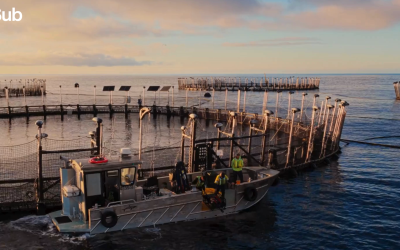
Dr. Shae Cameron from Huon Aquaculture put it plainly: the system “eliminates the need for net removal, enabling the repairs to be conducted in situ.” That’s not a marketing phrase, it describes a fundamental change in how net damage gets resolved. The net stays deployed. The fish stay in the pen. The repair happens at depth, in real time.
This isn’t a slight against divers. Our team works alongside dive crews every day, and we have deep respect for what they do. But sending a diver to 100 metres or more to stitch a net when that same job can be handled by an ROV is an unnecessary risk.
You can read more about how we approach this across the industries we serve.
Misconception 2: “ROV repairs are temporary patches, they won’t hold under real conditions.”
People picture gaffer tape and zip ties. The reality is closer to industrial stitching under tension.
The APAMA uses a polyurethane-coated Kevlar cord rated to 110 kg breaking strain. This isn’t a bandage solution, the repair is designed to be permanent for 95% of holes encountered in the field. The stitching follows a zig-zag staple pattern, which distributes load across the repair site and prevents the fix from unravelling under the dynamic forces nets experience in open-water conditions. Once the pattern is complete, the onboard winch applies precise tension, and the cord is trimmed into flush.
For farm managers in the Southern Ocean, Bass Strait, or the exposed sites off Norway and Chile, “it’ll hold” isn’t good enough. They need numbers. They need a breaking strain figure and a repair methodology. They can stand behind when something goes wrong. That’s exactly what the APAMA delivers.
The material choice matters, too. Polyurethane-coated Kevlar resists abrasion, UV degradation, and the biological fouling that shortens the life of lesser repairs. When we close a hole with the APAMA, we’renot buying time, we’re closing the problem.
Misconception 3: “ROV technology is too complex and expensive for everyday aquaculture operations.”
The APAMA was designed modular on purpose, and that decision came directly from watching operators in the field.
Routine maintenance is straightforward: a freshwater wash after each dive, user-serviceable components that a competent site technician can handle, and professional service intervals set at 500 hours. There’s no proprietary black box that sends the whole unit back to the manufacturer for a software update every six months. The system was built to work where it’s needed, on a barge in Macquarie Harbour, at a salmon farm in Rogaland, on a site in the Outer Hebrides and not just in ideal conditions close to a service centre.
Then there’s the cost of conversation, and it’s one worth having, honestly. A diver team, net removal ogistics, production downtime, the fish-escape liability, and the delay between damage identification and repair resolution those costs compound fast. The APAMA changes that equation by putting repair capability on the vessel rather than waiting for an external contractor to mobilise.
We’re not suggesting that every operator should own one outright. That’s a conversation worth having with us directly and our services team can walk through the options. But “it’s too expensive” deserves to be stress-tested against what the current approach actually costs per incident.
Misconception 4: “ROVs can’t operate effectively in the tough conditions we deal with , strong currents, murky water, and deep pens.”
This one probably frustrates us most from a technical standpoint, because the APAMA was specifically born in Southern Ocean conditions.
Hobart is not a gentle testing environment. The conditions that Southern Ocean Subsea operates in variable currents, low-visibility water, exposed sites were the design brief, not an afterthought. The APAMA carries a 300-metre depth rating out of the box, which covers the full operational range of commercial aquaculture net systems globally. Its six-degrees-of-freedom (6DoF) thruster configuration gives the operator precise control in current; the machine holds position and manoeuvres through the water column without fighting the operator at every input.
Visibility is addressed directly with four 1,500-lumen LED lights, which are positioned to illuminate the work site even in the kind of tannin-stained or biologically active water common to Tasmanian inlets, Chilean fjords, and Scottish sea lochs. The system doesn’t need perfect conditions to perform. It was engineered for the worst days on the water, not the best ones.
For operators in Norway managing sites at depth, or Canadian farms dealing with tidal surge, the capability envelope of the APAMA covers what they’ll actually encounter.
Misconception 5: “Switching to ROV repair means replacing your divers and disrupting your whole operation.”
This one frustrates the SOSub team most, not because it’s understandable (it is), but because it’s the furthest from the truth.
ROV repair isn’t a substitution. It’s an extension of what your team can do. Divers redirected away from deep net repair can focus on surface-accessible tasks, maintenance work, and the jobs where human judgement and dexterity actually matter. The ROV takes on the depth exposure. The divers take on more, not less.
Our team works alongside dive crews on a regular basis. The relationship is collaborative by design. Introducing the APAMA to a site isn’t a restructuring conversation, but it’s a capability conversation. What jobs are currently too risky, too slow, or too expensive? That’s where the ROV goes to work.
Why This Matters Beyond Aquaculture
The same misconceptions that slow ROV repair adoption in aquaculture show up in maritime infrastructure, offshore oil and gas, and marine research. Operators who currently deploy inspection-class ROVs to survey structural damage are leaving a significant capability gap between identification and resolution. The technology to close that gap, the same principles the APAMA applies to net repair, translates across industries.
If your team is currently using ROVs to look at problems without solving them, it’s worth asking what a repair-capable system could change.
We started SoSub because we kept seeing the same problems go unsolved. Damage that sat too long. Divers put in positions they shouldn’t be in. Production losses that came down to logistics rather than capability.
The technology is here. The misconceptions don’t have to be.
See what ROV repair actually looks like in your operation.
We’re not here to sell you a machine, we’re here to solve your problem.
Talk to the SoSub team today or explore the APAMA NRS in detail.
No obligation. Just a conversation with people who’ve actually been underwater.